
A tooth-by-tooth plan
You should know exactly which teeth are included and why, especially if you are choosing between treating 2 teeth versus 8 to 10 teeth.
Serving Houston, Texas & surrounding areas
Mon–Fri 8am–6pm Sat 9am–2pm
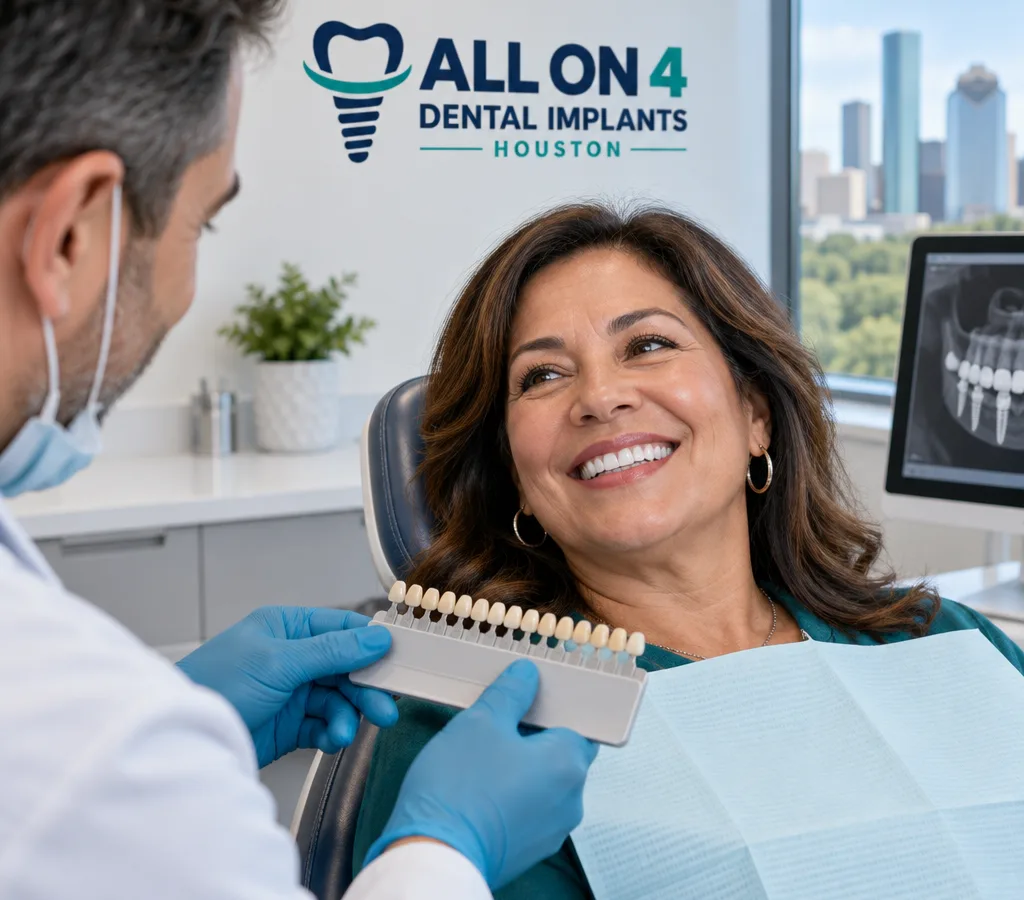
Veneer pricing in Houston, Texas
Get clear, written pricing for cosmetic veneers, including what changes the total, what is optional, and what is not.
Treatment overview
If you are comparing veneers price Houston options, you are usually trying to answer two questions: how much you should budget per tooth, and how to avoid a quote that changes after you say yes.
Veneers can be priced in different ways in Houston. Some offices quote one number for the veneer only, while others include the planning—photos and digital smile design—temporary veneers, and follow-up visits in one bundled fee. Both approaches can be fair, but they are not comparable unless you know what is included.
At All On 4 Dental Implants Houston, we focus on transparent pricing and a clear scope before any prep work starts. You should leave your consult knowing which teeth are being treated, what material is being used, what the timeline looks like, and which items could add cost if you choose them.
Planning your investment
In Houston, porcelain veneers typically run about $1,200 to $2,500 per tooth, while composite veneers often fall around $250 to $900 per tooth, depending on complexity and the dentist's workflow. A small cosmetic case of 2 to 4 teeth can be a few thousand dollars, while a larger smile design of 8 to 10 teeth is commonly priced in the five-figure range.
Your final veneer cost in Houston changes most with material choice, how many teeth are treated, whether any teeth need shaping, and whether you need prep work first, such as bite adjustment, replacing old bonding, or treating decay. Exact pricing is confirmed after an exam and a written treatment plan.
Understanding your quote
A veneer quote is not just a number. It is the sum of planning, materials, lab work, clinical time, and risk management.
Common cost drivers include:
A practical way to compare veneers Houston cost is to ask for the same format from every office: a written per-tooth price, a list of included steps, and a list of optional add-ons with their prices.
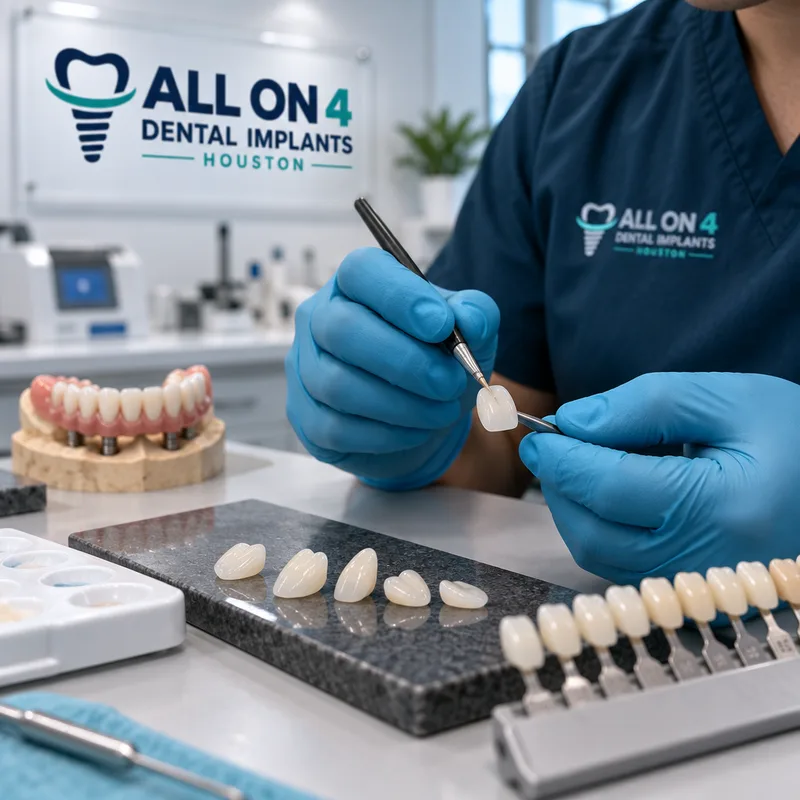
Your written plan
You should know exactly which teeth are included and why, especially if you are choosing between treating 2 teeth versus 8 to 10 teeth.
Porcelain and composite are not interchangeable. The quote should state the material, brand or lab category if relevant, and what that means for appearance and maintenance.
If tooth shaping, old bonding removal, or temporary veneers are anticipated, they should be discussed before treatment begins.
If decay, cracks, or gum inflammation show up at the exam, you should understand whether that changes the veneer plan and how it affects the total.
Retainers or night guards are often recommended after veneers, especially for patients who clench or grind.
Most veneer cases require multiple visits. A clear schedule helps you plan time off work and travel in Houston traffic.
Choosing a material
When people ask, “how much are veneers in Houston,” the biggest swing is usually material.
Porcelain veneers are fabricated outside the mouth, typically by a dental lab, then bonded in place. They take more steps—impressions or scans, lab fabrication, try-in, and a bonding appointment. In exchange, porcelain tends to hold color better over time and can be layered for a more natural look.
Composite veneers are usually built directly on the tooth in the chair with resin, then shaped and polished. They are often priced lower and can sometimes be completed faster, but they may require more maintenance and are more susceptible to staining depending on habits and the specific resin.
Neither option is automatically “better.” If your main goal is a fast refresh for a small chip or uneven edge, composite may make sense. If you are changing shape, closing spaces, or rebuilding a larger smile zone, porcelain is often the more predictable route. A consult should match the plan to your teeth, your bite, and how long you want the result to last.
Consultation to final bonding
We look at your goals, tooth and gum health, and your bite. This is where we confirm whether veneers are appropriate and which teeth are good candidates.
Photos and measurements guide the proposed shape and shade. If you want a major change—whiter, longer, or more symmetrical—this planning step matters for both appearance and cost.
If teeth need shaping, it is done conservatively and in a way that protects enamel when possible. Then we capture the model for fabrication.
Some patients wear temporary veneers while the final set is being made. Whether temporaries are needed depends on how much prep is done and the esthetic goals.
We check fit, color, and bite, then bond the veneers. This appointment is detail-focused because the bonding step affects longevity.
We recheck bite and comfort, then discuss cleaning, stain prevention, and whether a night guard is recommended.
If you want a number you can actually budget around, ask for a written veneer plan that lists the included steps and the optional add-ons before you commit.
Call to ScheduleCommon questions
Veneer pricing varies because the scope and materials vary, not just because of the office. Two quotes can look far apart if one includes digital smile planning, temporary veneers, and follow-up visits while another lists those items separately, or if one uses a more customized lab process.
A “full smile” is often 8 to 10 upper teeth, and that is commonly priced in the five-figure range in Houston when done with porcelain. The right number of teeth depends on your smile line and bite, so an exam is the safest way to confirm how many teeth you actually need to treat.
Both pricing styles are common in Houston: per-tooth pricing and bundled case pricing. Per-tooth makes it easier to compare materials, while bundled pricing can be easier to budget if it clearly lists what is included, such as planning, temporaries, follow-ups, and any protective appliance if recommended.
Often, yes. Removing old bonding, replacing failing restorations, or switching a tooth from a veneer plan to a crown plan changes materials and clinical time, which can change the total. The most accurate estimate comes after we evaluate what is already on the teeth and what needs to be rebuilt first.
There can be. Common additional items include a night guard for patients who clench or grind, treatment for gum inflammation before cosmetic work, and replacement of old fillings on teeth that will receive veneers. A clear plan lists these as separate line items when they are needed.
Many veneer cases take 2 to 3 visits spread over a few weeks, depending on lab turnaround and whether temporaries are used. In Houston, scheduling can also be influenced by work travel and commute times, so we plan appointments in a way that keeps the case moving without rushing bonding steps.
Share what you want to change about your smile, and we will confirm candidacy and provide a written plan with transparent Houston pricing for your specific teeth.