
Bite-first planning
We check how your teeth contact and slide, because a bridge that looks good but hits wrong can chip, loosen, or create jaw soreness.
Serving Houston, Texas & surrounding areas
Mon–Fri 8am–6pm Sat 9am–2pm
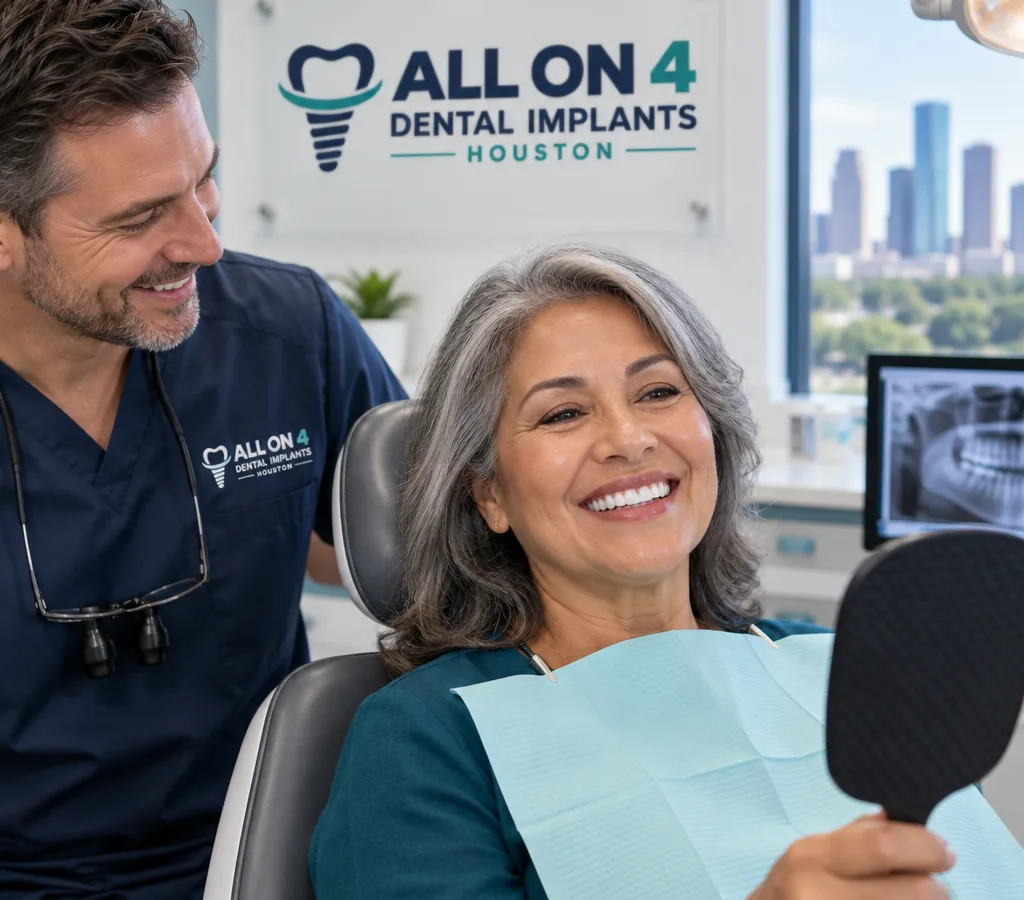
Dental bridge service in Houston, Texas
Replace missing teeth with a bridge that looks natural, bites comfortably, and fits your long-term plan. Get a clear exam-based recommendation and a step-by-step timeline before treatment starts.
Treatment overview
If you are searching for dental bridge Houston TX services, you are usually dealing with one of two problems: a visible gap you want to hide, or a bite that no longer works the way it used to. A well-planned bridge does more than fill space. It stabilizes how your teeth meet, supports clear speech, and helps keep nearby teeth from shifting.
At All On 4 Dental Implants Houston, our goal is to recommend the bridge type that makes sense for your mouth and your timeline. That starts with an exam, gum evaluation, and imaging to check the health of the supporting teeth and the bone in the area of the missing tooth or teeth. From there, we walk you through realistic options, what has to happen first—such as treating decay or gum inflammation—and what results you can expect when you chew.
Houston patients often come in with older dental work that has already been through a lot: fillings, crowns, a past root canal, or a bridge that finally failed. We take a practical approach. If a bridge can be supported predictably, we plan it. If it cannot, we explain why and what alternative is safer for your bite.
Bridge options
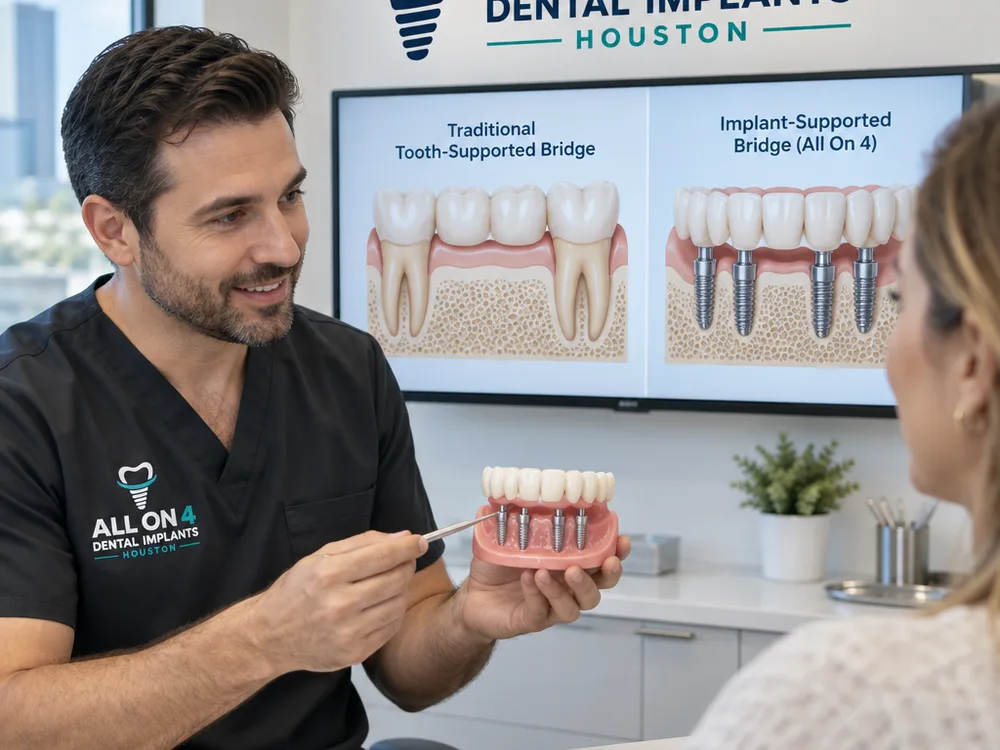
The right bridge depends on what is missing, what will hold it up, and what you want long-term.
We will explain pros and cons in plain language: how each option feels when you bite, how it is cleaned, how repairs are handled, and what conditions—gum health, bite wear, and clenching—can shorten its lifespan.
Your care plan
We check how your teeth contact and slide, because a bridge that looks good but hits wrong can chip, loosen, or create jaw soreness.
For a traditional bridge, the supporting teeth must have enough structure and healthy gum support. If they are cracked, heavily filled, or unstable, we discuss alternatives.
We match tooth color and contour to your smile so the bridge blends in, especially along the front where small differences show.
You will leave with specific instructions for floss threaders, water flossers, and professional cleaning intervals suited to bridges.
Material selection depends on bite forces and span length. We recommend options that balance strength, esthetics, and serviceability.
Treatment timeline
We confirm what is missing, assess gum health, check the supporting teeth or implant sites, and map out how your bite will be restored. If you grind or clench, we factor that into the plan.
For a traditional bridge, the anchor teeth are shaped for crowns. For an implant-supported bridge, implants are placed first and allowed to integrate before the bridge is attached, unless a same-day approach is appropriate for your case.
We capture precise impressions, digital or conventional depending on the case, so the lab can build an accurate fit. Many patients wear a temporary restoration to protect the prepared teeth and keep the smile looking normal.
At delivery, we verify fit, contact points, and bite. Small adjustments matter. Once everything checks out, the bridge is cemented or secured for implant restorations, and cleaning instructions are reviewed.
A bridge is a working part of your bite. We recommend periodic checks to catch early wear, cement breakdown, or gum irritation, and professional cleanings to protect the margins around crowns and pontics.
Planning your investment
In Houston, a dental bridge typically ranges from about $2,000 to $5,500 for a traditional fixed bridge, often priced per unit, while an implant-supported bridge commonly runs higher because it includes implant components and surgical care. The final cost depends on how many teeth are being replaced, whether the supporting teeth need crowns or buildup, material choice such as zirconia or porcelain-fused-to-metal, and any needed gum or decay treatment first. After an exam and imaging, we confirm a written plan and exact fees for your case.
Check AvailabilityChoosing your bridge
Most bridge decisions come down to support, bite forces, and hygiene.
Support: A traditional bridge depends on the anchor teeth. If those teeth have large fillings, fractures, or past root canals, they may still be usable, but they also may not be predictable long-term. An implant-supported bridge shifts the support to implants instead of natural teeth.
Bite forces: Houston patients who clench at night or have significant enamel wear often need a bridge design and material that can take higher forces. That may also mean a nightguard recommendation to protect your investment.
Hygiene: A bridge is not cleaned like individual teeth. You need a way to clean under the pontic and around the margins at the gumline. If a bridge design cannot be cleaned well, it tends to develop gum inflammation and odor, and it can fail early.
If you are also weighing implant-supported full-arch options for many missing teeth, our team at All On 4 Dental Implants Houston can explain where a bridge fits into the bigger picture, and when other treatment plans may be more appropriate.
“My old bridge kept trapping food and the gum stayed irritated. They showed me exactly where the contour was wrong and why it was hard to clean. The new bridge feels smoother, my bite feels even, and I can actually floss under it.
“I was nervous about how it would look because it is near the front. The shade match is spot on, and the shape doesn't look bulky like my previous dental work.
Common questions
A traditional fixed bridge commonly takes 2 visits over about 2 to 4 weeks, assuming the supporting teeth and gums are healthy. If you need gum treatment, build-ups, or a root canal first, the timeline extends. Implant-supported bridges usually take longer because implants often need healing time before the final bridge is attached.
An implant-supported bridge can be a better choice when you want to avoid crowning healthy adjacent teeth or when multiple teeth are missing in a row. A traditional bridge can be a good option when the neighboring teeth already need crowns and have strong support. The right answer depends on bone availability, gum health, bite forces, and how you prefer to maintain it.
A properly fitted bridge should feel stable and natural when you chew, but it may feel different for the first few days as your tongue adjusts. The biggest driver of comfort is bite accuracy, including how the bridge contacts when you close and when you chew. If anything feels high or causes soreness, it should be adjusted promptly.
You can often get a bridge after gum disease is controlled, but placing a bridge on unstable gums increases the chance of failure. In Houston, many bridge evaluations start with a periodontal check because the gumline around crowns is a common place for inflammation to flare. The safest plan treats active gum disease first and then designs the bridge for cleanability.
You typically clean under a bridge with floss threaders or super floss to reach beneath the pontic, plus a water flosser for added rinsing. The exact method depends on the bridge shape and how closely it sits to the gum tissue. We show you the tools that fit your bridge design and what to watch for at the gumline.
The most common causes are decay at the crown margins of the supporting teeth, gum inflammation from inadequate cleaning access, and bite overload from clenching or uneven contacts. Bridges can also fail if an anchor tooth cracks or if the cement seal breaks down over time. Routine exams help catch these issues early, when repairs are simpler.
Tell us what you are dealing with, whether it is one missing tooth or a larger gap. We will evaluate support, bite forces, and cleaning access, then recommend the dental bridge option that makes sense for your mouth and your goals in Houston.